N95 vs KN95 Masks: What’s the Real Difference?
Choosing the right face mask, especially between KN95 and N95 respirators, can be confusing. Both offer high filtration efficiency and are widely used for protection against airborne particles, viruses, and bioaerosols. In this guide, we compare N95 vs KN95 masks based on certification standards, fit, filtration, and reuse guidelines to help you make an informed choice.
What are N95 and KN95 masks?
1. N95 Respirator Masks
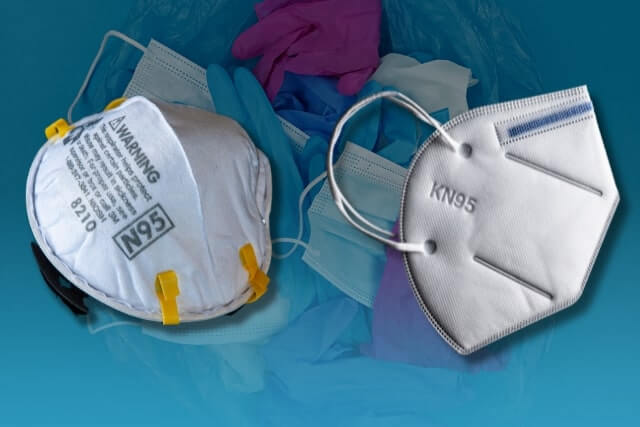
N95 respirators are widely recognized as the benchmark for protective face coverings in clinical and industrial environments. They are engineered to block at least 95% of airborne particles, including fine aerosols and larger droplets. Thanks to their head straps and snug design, N95 masks form a secure seal around the nose and mouth, minimizing leakage and maximizing protection.
Key Features:
-
Certified by NIOSH under U.S. standards.
-
≥95% filtration efficiency against particles as small as 0.3 microns.
-
Secure head straps ensure a tight seal and reduced air leakage.
-
Commonly used in healthcare settings, especially during aerosol-generating procedures.
Best For: Medical professionals, frontline workers, and anyone in high-risk environments requiring maximum respiratory protection.
Get yours at: Dynarex N95 Particulate Respirator Mask (Molded, 12/20 CS).
2. KN95 Masks
KN95 masks are the Chinese standard equivalent to N95 respirators, offering comparable filtration efficiency of ≥95%. Unlike N95s, KN95s typically use ear loops instead of head straps, which can make them easier to wear but may result in a slightly looser fit. They remain a reliable option for everyday use and general protection against airborne particles.
Key Features:
-
Tested under GB2626-2019 standards in China.
-
≥95% filtration efficiency against airborne particles.
-
Comfortable ear loops for quick wear and removal.
-
Effective for consumer use, commuting, and non-critical healthcare settings.
Best For: General public use, workplaces where N95s are not required, and daily protection in crowded or high-risk areas.
Get yours at: KN95 Respirator Mask (95% Filtration, Pack of 10)
Both N95 as well as KN95 are respirators that are made and tested according to US and Chinese standards respectively. They have the ability to filter the fine particulate matter (PM) up to 3 microns with a 95% efficiency.
For N95, the CDC National Institute for Occupational Safety and Health (NIOSH) regulates its manufacturing according to the pre-set criteria.
However, KN95 is a mask made and tested according to Chinese healthcare authorities. Although both the masks are efficient in performance, N95, unlike KN95 has ear loops which generally give a looser fit, and comes with straps that ensure that it is fixed well at its place once worn.
Difference between N95 and KN95 masks
Both N95 and KN95 illustrate slight differences that usually go unnoticed owing to their comparable quality and efficacy. These differences are based on various parameters such as on flow rate, inward flow, test agents, etc. The following table indicates the differences between N95 and KN95 respirators:
| Parameters | N95 | KN95 |
| Production rights/locality | USA | China |
| Standard | NIOSH-42 CRF 84 | GB2626-2006 (updated to GB2626-2019) |
| Filter performance (i.e. 0.3 microns) | ≥95% | ≥95% |
| Flow rate | 85 L/min | 85 L/min |
| Test agent | NaCl | NaCl |
| Force applied | -245 Pa | -1180 Pa |
| CO2 clearance requirement | N/A | ≤1% |
| Total inward flow | N/A | ≤8% |
| Inhalation resistance | ≤343 Pa | ≤350 Pa |
| Exhalation resistance | ≤245 Pa | ≤250 Pa |
| Exhalation valve leakage requirement | Leak rate ≤ 30 mL/min | Depressurization to 0 Pa ≥ 20 sec |
| Cost | Higher than KN95 | Lower than N95 |
Keeping in view the above-mentioned specifications, it can be manifested that both masks are capable of filtering PM 2.5, non-oil-based particles, and bioaerosols such as viruses.
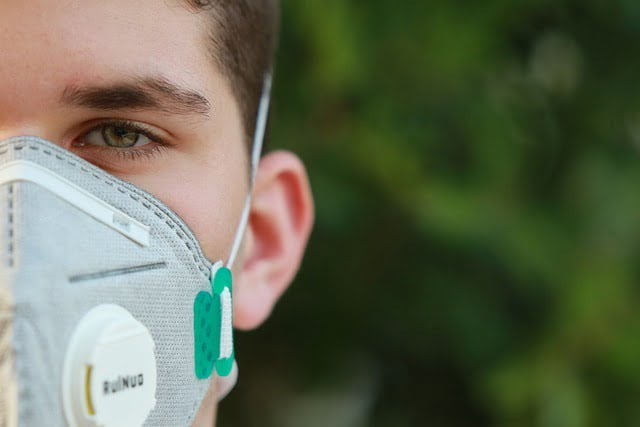
Both N95 and KN95 can be purchased from Health Supply 770 by simply visiting their website. They have a wide range of medical products with the best prices.
KN95 vs N95: Frequently asked questions
Although wearing a mask in a proper way has been frequently taught by the media during the recent COVID-19 pandemic, users are still confused regarding their storage or recycling. Here are some of the commonly asked questions about KN95 and N95 respirators which are being addressed based on the officially published guidelines:
1. Can I reuse KN95 and N95 masks?
Yes, both KN95 and N95 can be reused by the same for several days. According to the experts from the School of Public Health, West Virginia University, to improve the fit, a surgical mask or a regular cloth mask can be worn above a KN95. However, no such measure is needed for N95 as it already has a tighter fit.
2. How long should I wear the same mask?
Ideally, an N95 or KN95 mask should be replaced after 72 hours of use. However, a mask once used, if not wet, soiled, or deformed, can be stored for future use. With a proper gap, the same masks can be worn again and again until they become visibly contaminated.

3. Can KN95 and N95 be washed?
No, both KN95 and N95 should not be subjected to washing. This is due to the fact that these masks have a static charge for the entrapment of microbes such as viruses. By washing them, these viruses can be spilled into other clothes or the washing liquid thus causing contamination. Moreover, the mask, once washed, loses its ability to function properly.
4. How can I store a used KN95 or N95 mask?
An in-use KN95 or N95 mask is to be stored in a breathable container such as a paper bag. The storage container must also be properly named to avoid the chances of accidental usage by another wearer.
5. Are N95 or KN95 masks better?
Both masks filter ≥95% of airborne particles. N95 masks are NIOSH-certified in the U.S. and generally provide a tighter fit, making them preferred in healthcare settings. KN95 masks meet Chinese GB2626-2019 standards and are widely used for consumer protection.
6. Who should not wear an N95 mask?
Children, people with breathing difficulties, or individuals with certain medical conditions may find N95 masks uncomfortable or unsafe. Always consult a healthcare provider if unsure.
7. Is KN95 better than N95 for air quality?
Both offer similar filtration efficiency. N95 masks are tested under stricter U.S. standards, while KN95 masks are effective for general air pollution and consumer use.
8. Do N95 masks stop viruses?
Yes, N95 masks can filter ≥95% of airborne particles, including bioaerosols such as viruses, when worn properly.
9. How do you know if a KN95 mask is authentic?
Check for GB2626-2019 certification markings, manufacturer details, and packaging quality. Avoid masks without labeling or those sold by unverified vendors.
10. Can you sleep with an N95 mask?
It is not recommended. N95 masks are designed for short-term protective use and may cause discomfort or restricted airflow during sleep.
11. What does N95 stand for?
“N” means the mask is not resistant to oil. “95” indicates it filters at least 95% of airborne particles.
12. Why are N95 masks so uncomfortable?
N95 masks form a tight seal to ensure maximum protection. This snug fit can cause pressure and discomfort during extended wear.
13. Does wearing an N95 make you tired?
Some users may feel fatigue due to restricted airflow and the tight seal. Breaks and proper fit adjustment can reduce discomfort.
Conclusion
The use of personal protective equipment for healthcare providers has always been given importance. However, due to the COVID-19 pandemic, wearing masks, gloves, and face shields has become a norm among the people.
In this regard, from the masks prepared at home using a piece of cloth to those manufactured and tested by the respective authorities such as N95 and KN95 among others are available to choose from. When compared, both N95 and KN95 have proven to be equivalent in terms of their efficacy and performance.